 Alan Schwegler
A space-based reinvention of building management.
JCI's flagship building-management platform — a decades-old JAVA interface rebuilt as a modern, responsive HTML5 experience, organized around how operators actually think: space by space, not equipment by equipment.
The work at a glance.
- The problem
- An equipment-centered legacy interface made building operations difficult to navigate.
- My responsibility
- One of six UX team members; contributed information architecture, wireframes, and visual design.
- The key decision
- Organize the experience around spaces and the way operators understand buildings, with responsive desktop and mobile views.
- The outcome
- Metasys 8.0 generated $3.4M in subscription revenue. My design contribution supported a broader team outcome; this is not a personal revenue attribution.
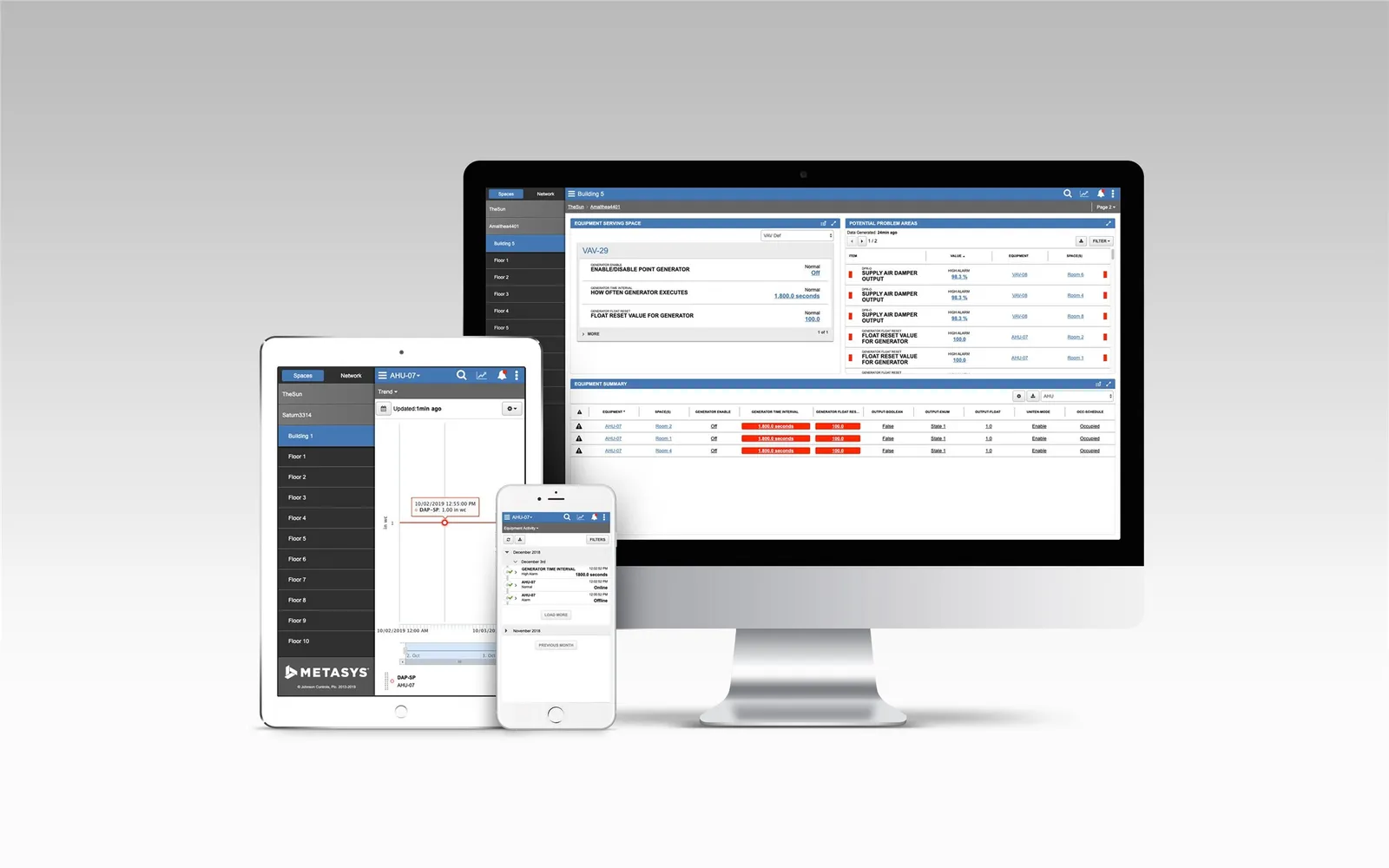
One revolutionary idea: shift the software’s focus from equipment-based navigation to space-based navigation.
The core challenge was recreating a decades-old JAVA interface in HTML5 while improving the commissioning, monitoring, and reporting experience across both desktop and mobile.
Metasys UI lets operators navigate space to space for real-time views of a floor and the equipment serving it — filtering data to zero in on problem areas, reading photo-realistic dashboards to spot issues at a glance, and managing buildings from anywhere on mobile.
Three problems standing in the way.
Space vs. equipment
Operators think in spaces, not equipment. A service call was never “VAV-34 has a heating issue” — it was “Room 42 is running hot, can someone adjust it?” Yet users had been conditioned to navigate by equipment for decades. We had to invert a mental model the industry itself had reinforced since the ’90s.
“Infinitely complex” data
Metasys is often described as infinitely complex — the volume of data streaming from thousands of installed sensors is staggering. The challenge was delivering a genuinely simple, usable experience on top of all of it.
Functionality on the go
The data-rich experience also had to work on a phone. JCI was one of the first companies in the complex-building market to offer a true mobile building-management experience.
From voice-of-customer to a shipped visual system.
Define who we’re designing for
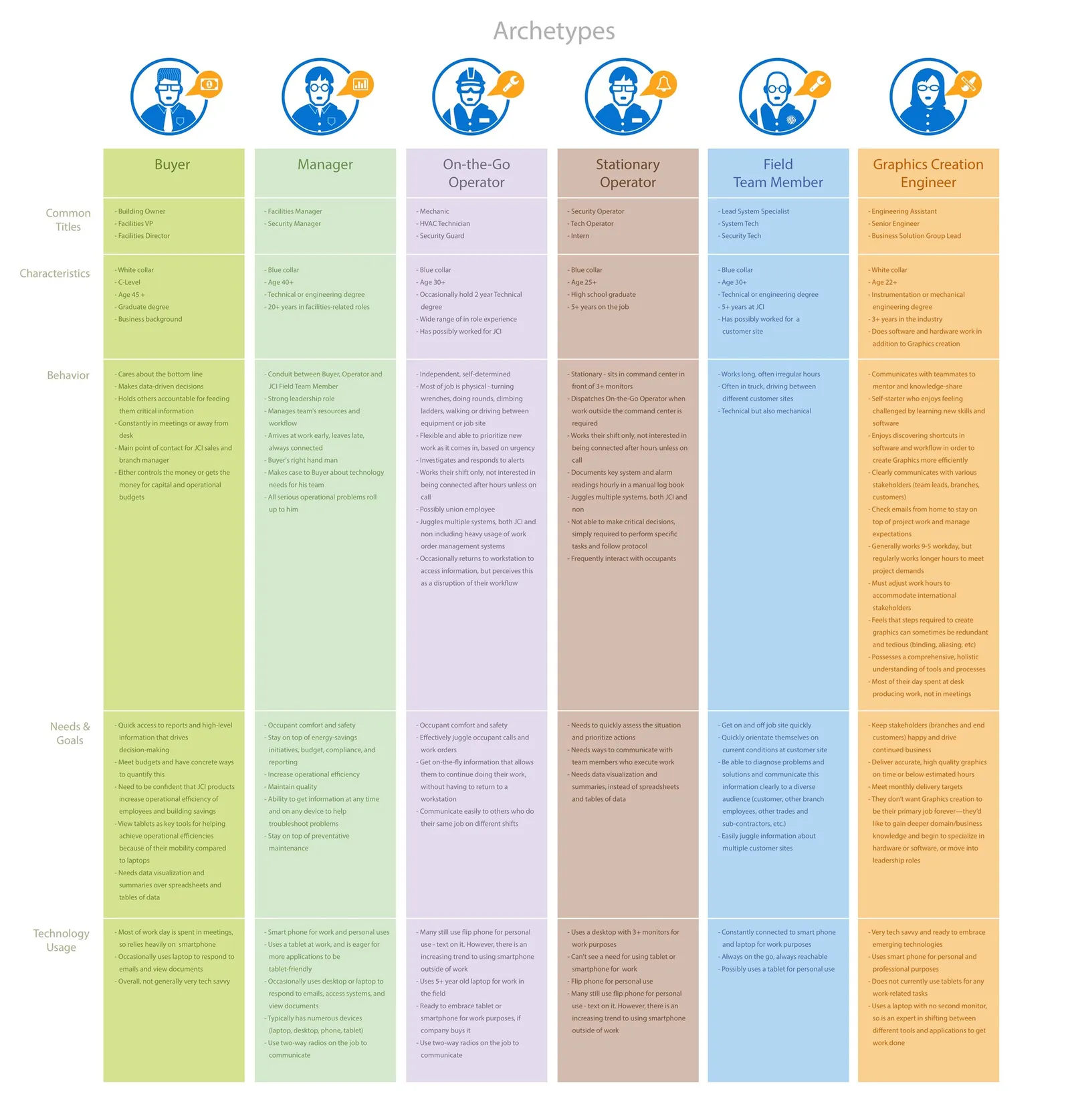
The first step was understanding who our users are and what they needed from Metasys UI. I was part of the voice-of-customer initiative led by our research lead — a national series of interviews with Johnson Controls branch employees and customers.
Six personas emerged as critical to the success of MUI, and became the reference point every downstream decision was measured against.
Sketch the information architecture
With stakeholder alignment on who we were designing for, a series of brainstorming and sketching sessions worked out the information architecture for space-based navigation — including the hard part: how commissioning, monitoring, and reporting would live inside the new paradigm.
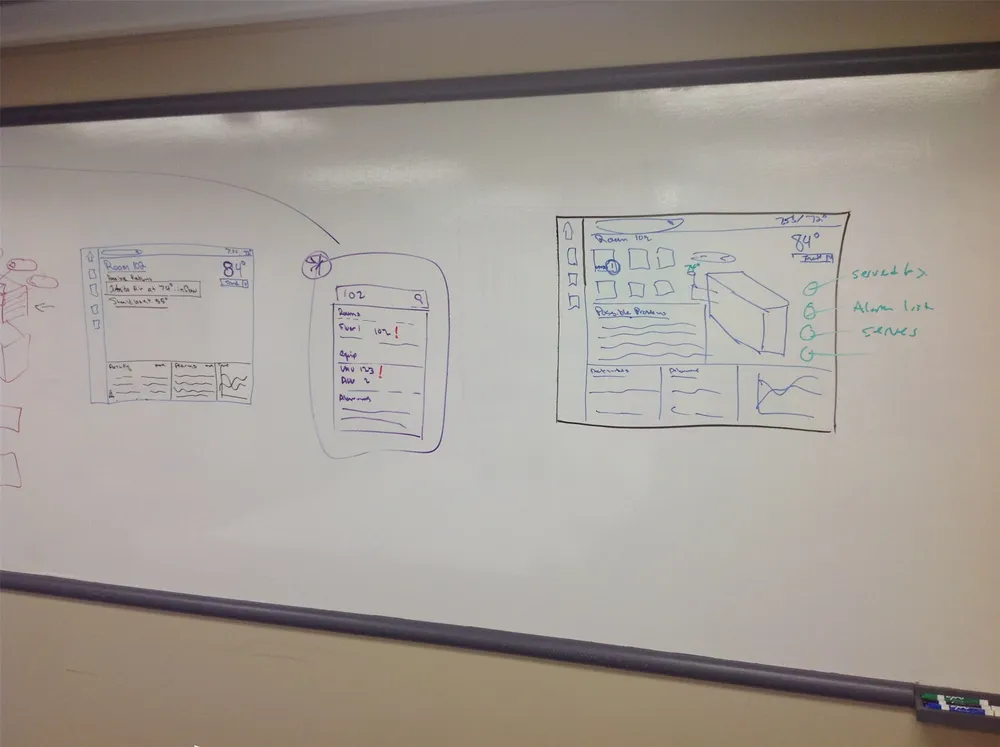
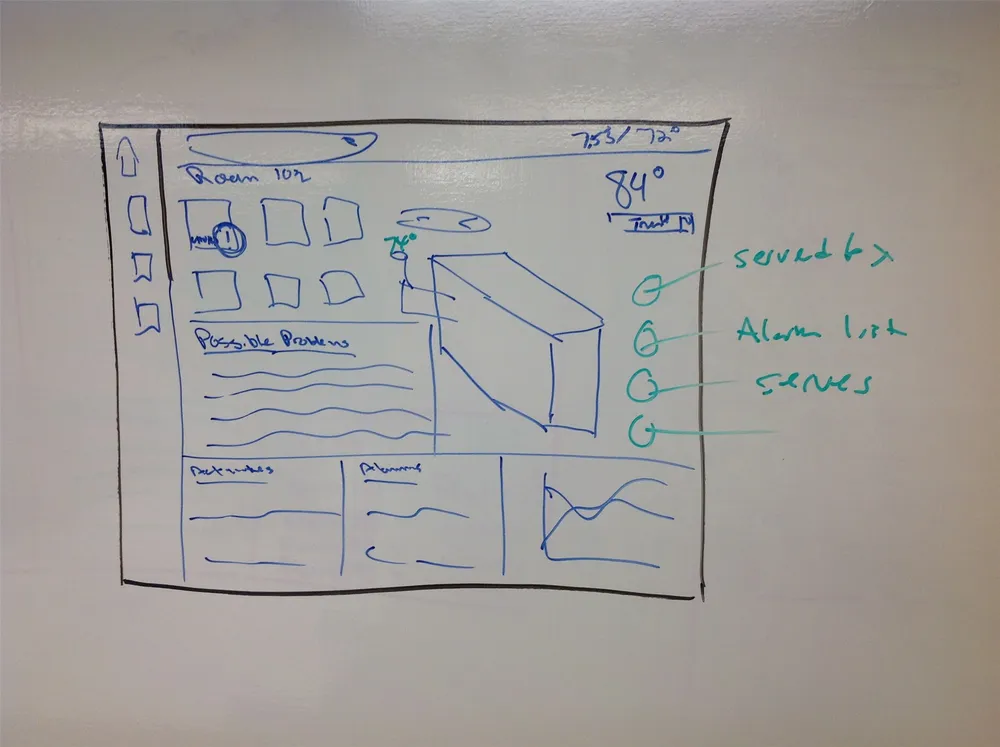
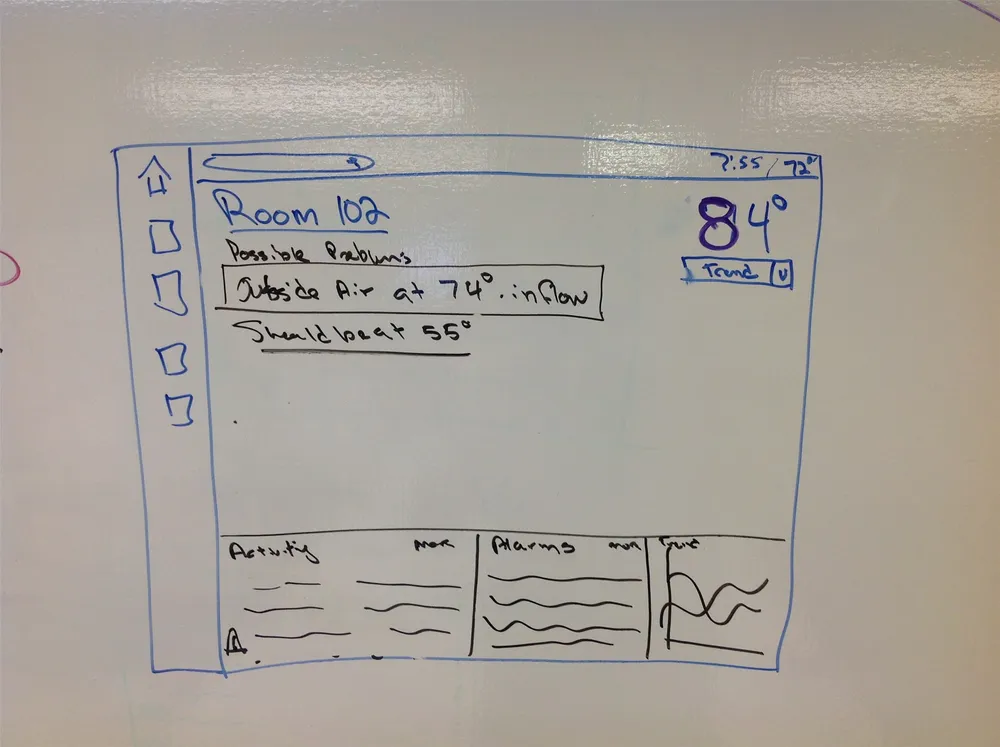
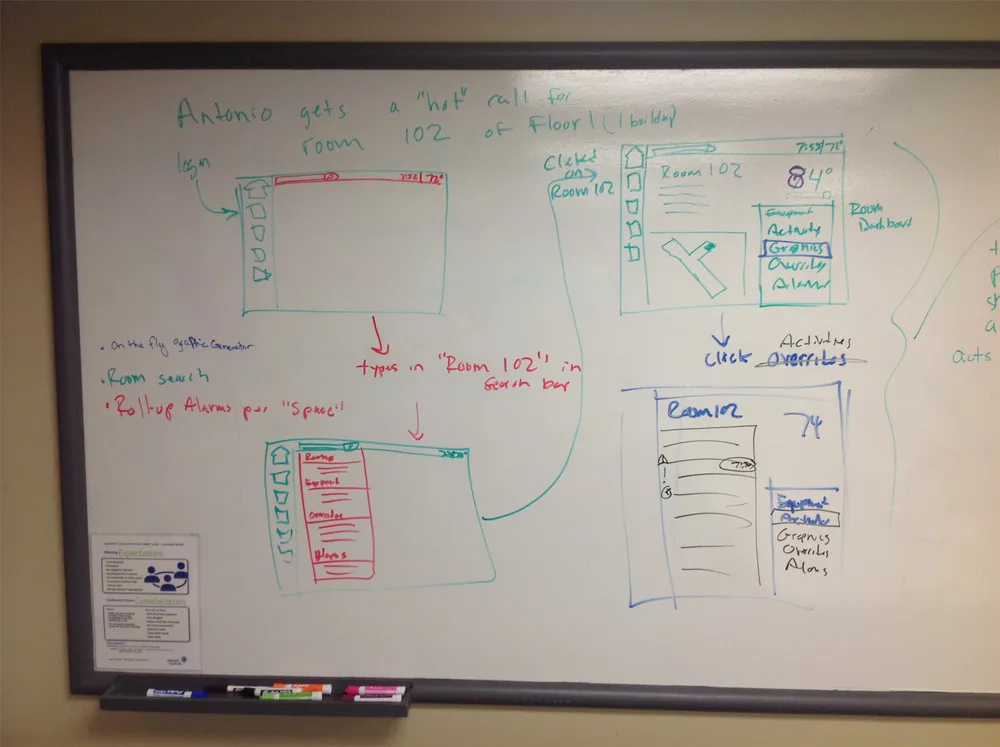
Sketching & IA sessions
Tell the story, space by space
Our solution was story-based: as a user navigates down from Campus to Room, the interface reveals exactly what’s happening in that space. I turned the sketches into static wireframes to pull the ideas together and show stakeholders a cleaner, more cohesive vision.
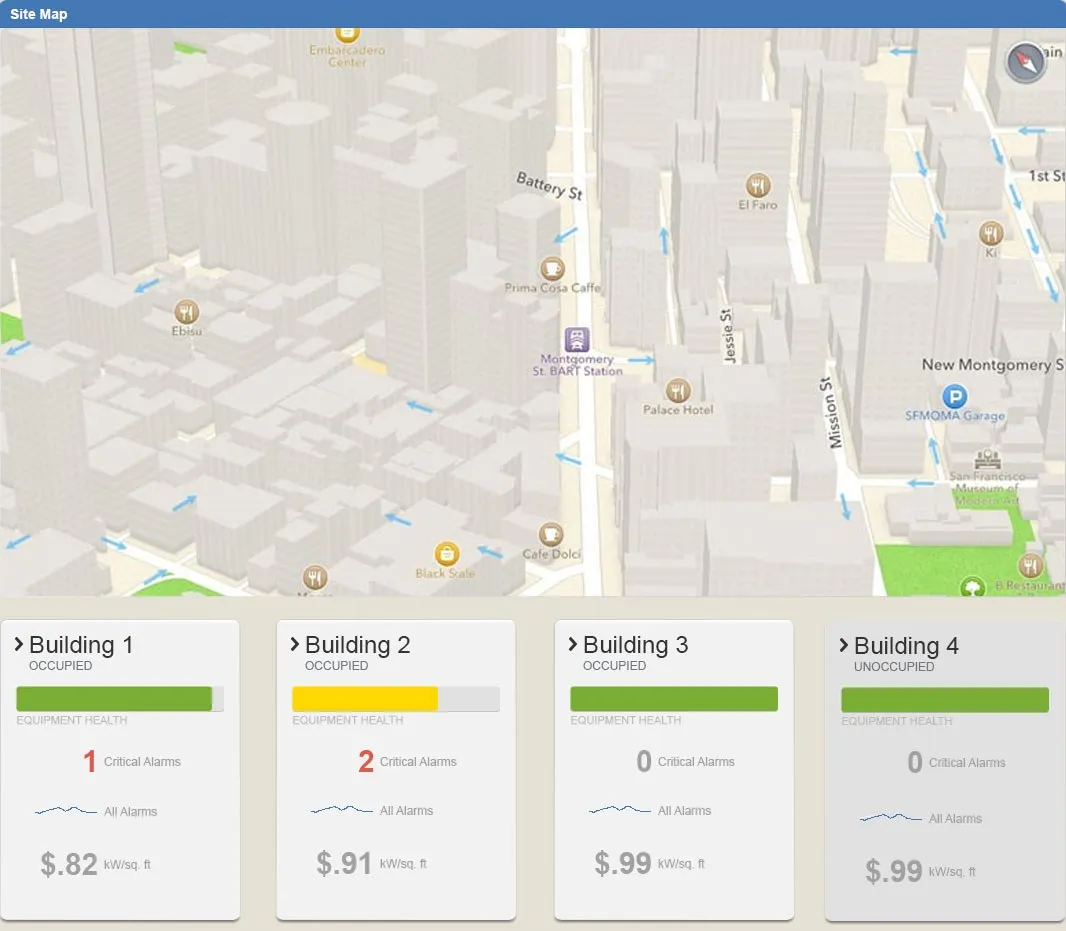
Many buildings at a glance
Summary information, overall performance and health across an entire portfolio of buildings.
Aggregated to one building
Real-time kWh energy performance — critical for LEED certification and a genuine game-changer at the time.
Added after feedback
Air-distribution systems plus heat-maps showing which zones ran above or below set-point — surfaced by customers in review.
Where the work happens
Occupancy, set-points, feeding equipment, and editable schedules that govern the space — the heart of energy savings.
Supporting artifacts
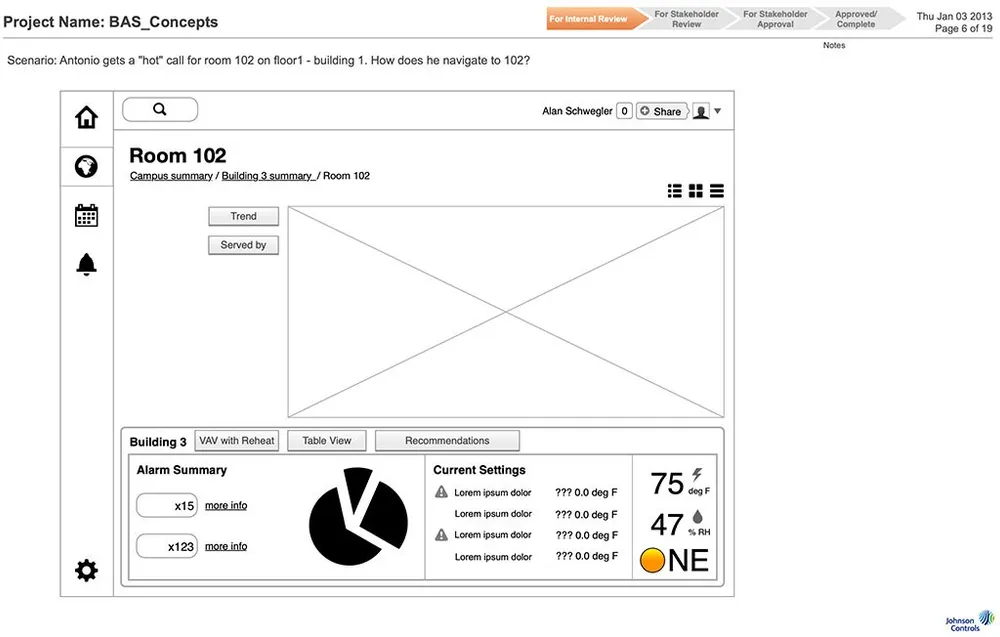
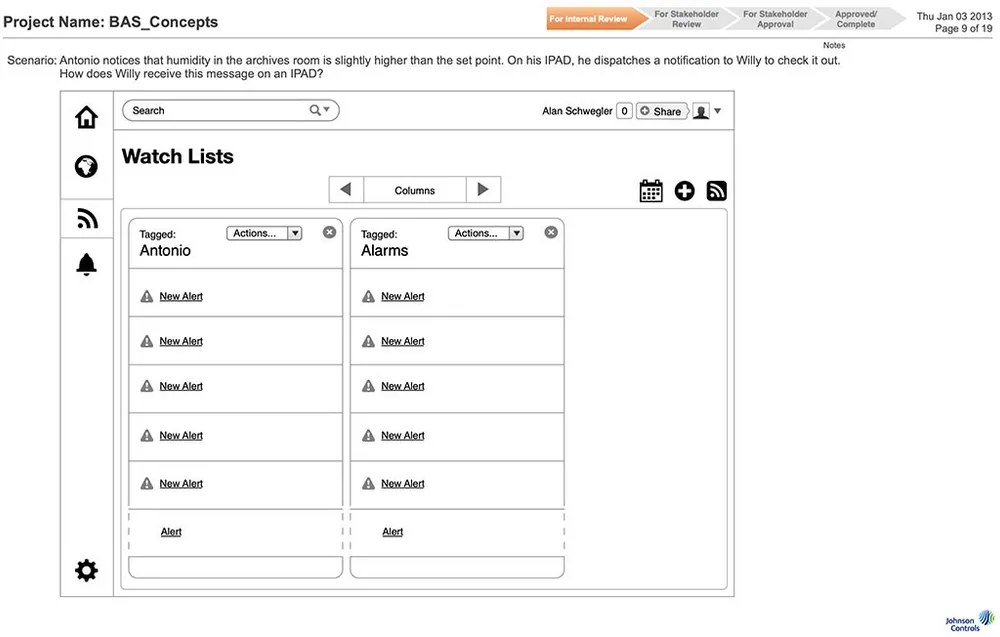
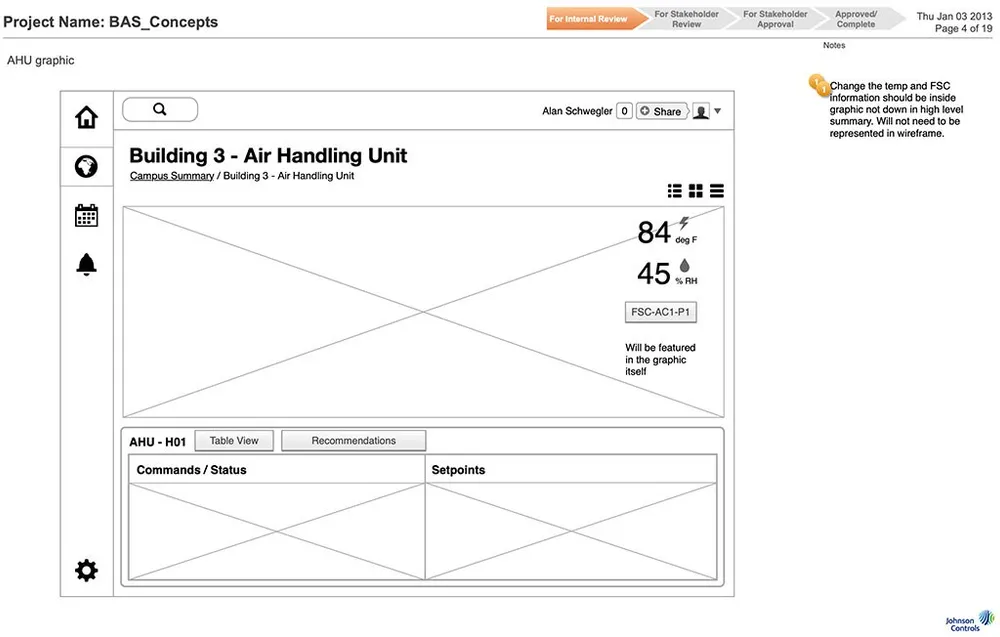
Supporting artifacts
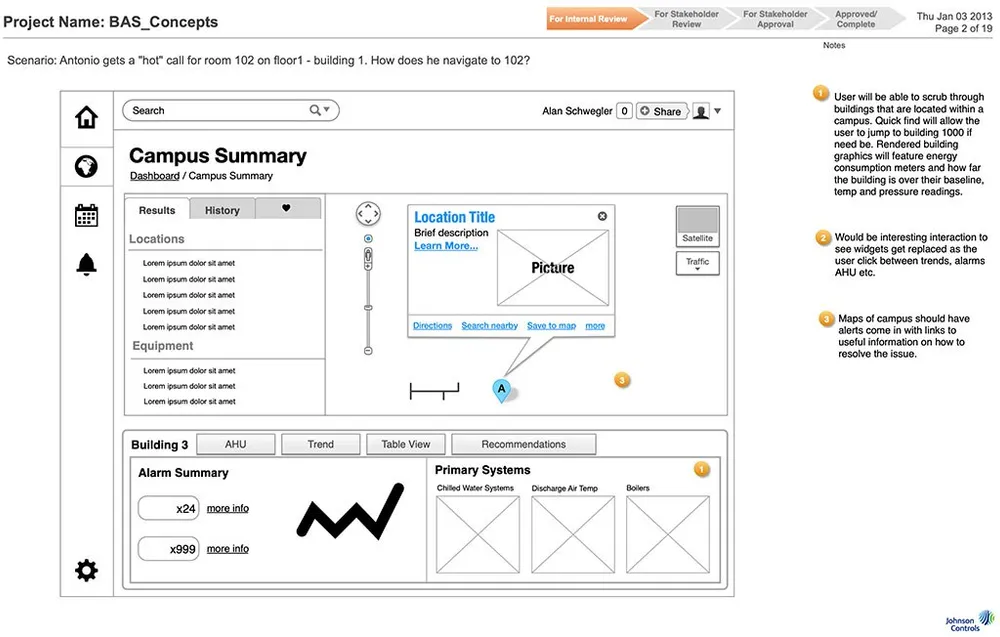
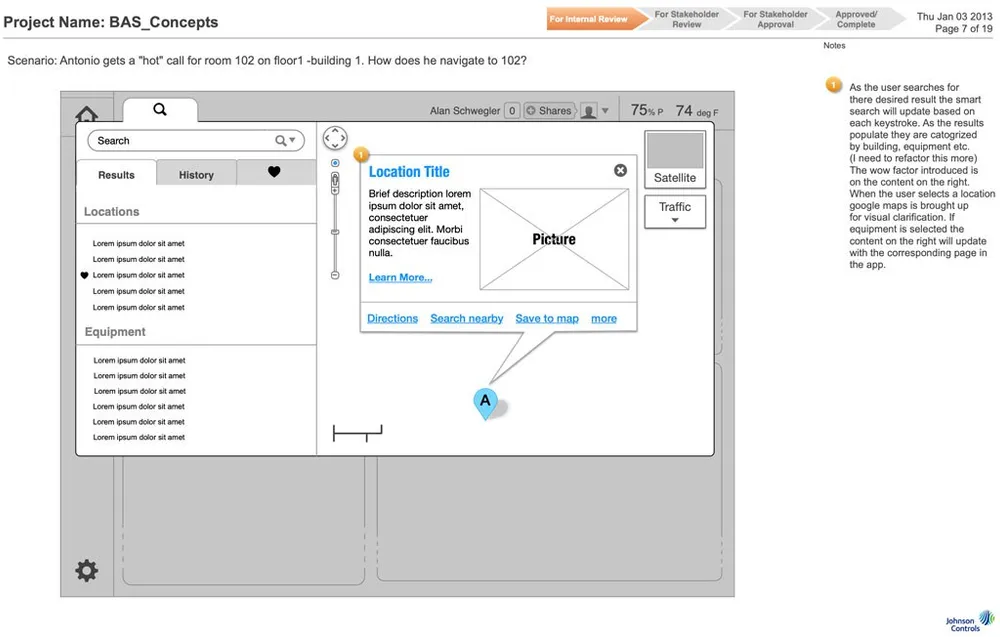
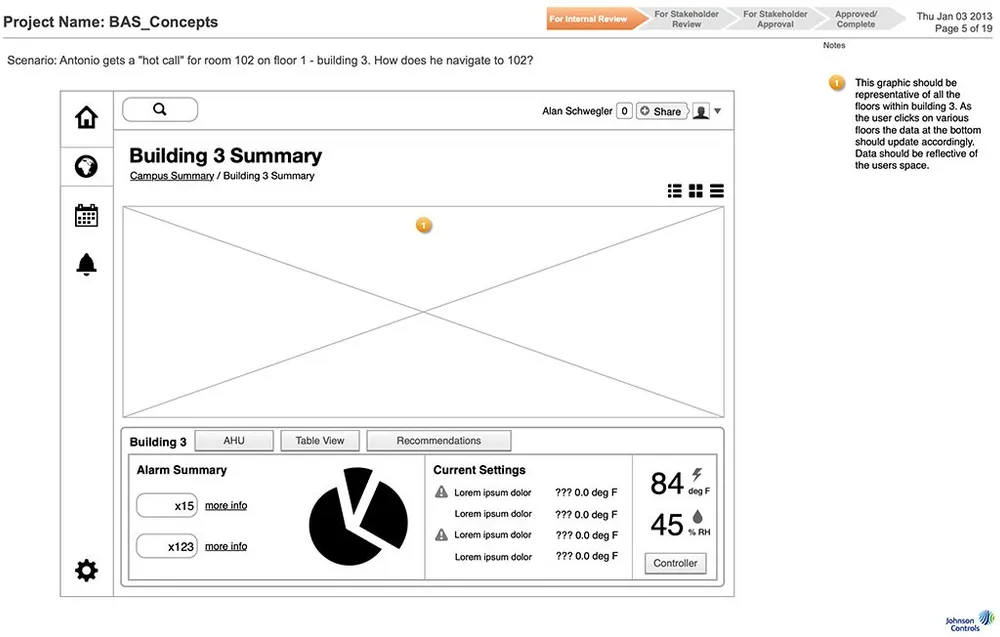
Static wireframes · Campus → Room
Make it tangible in Axure
Next, I turned the static wireframes into an interactive lo-fi prototype in Axure. It gave stakeholders and developers something real to make decisions from — and soon the planning sessions started, JCI moved into action, and the designs began coming to life.
Interactive lo-fi prototype — 5zf7aj.axshare.com ↗· password-protected — credentials on request
Supporting artifacts
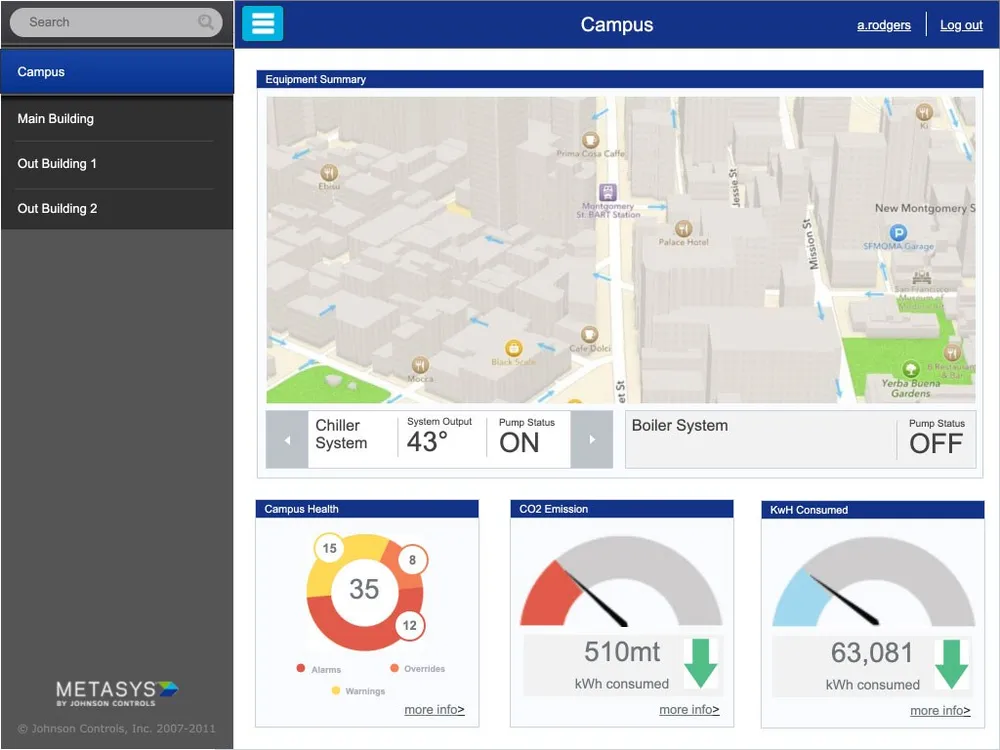
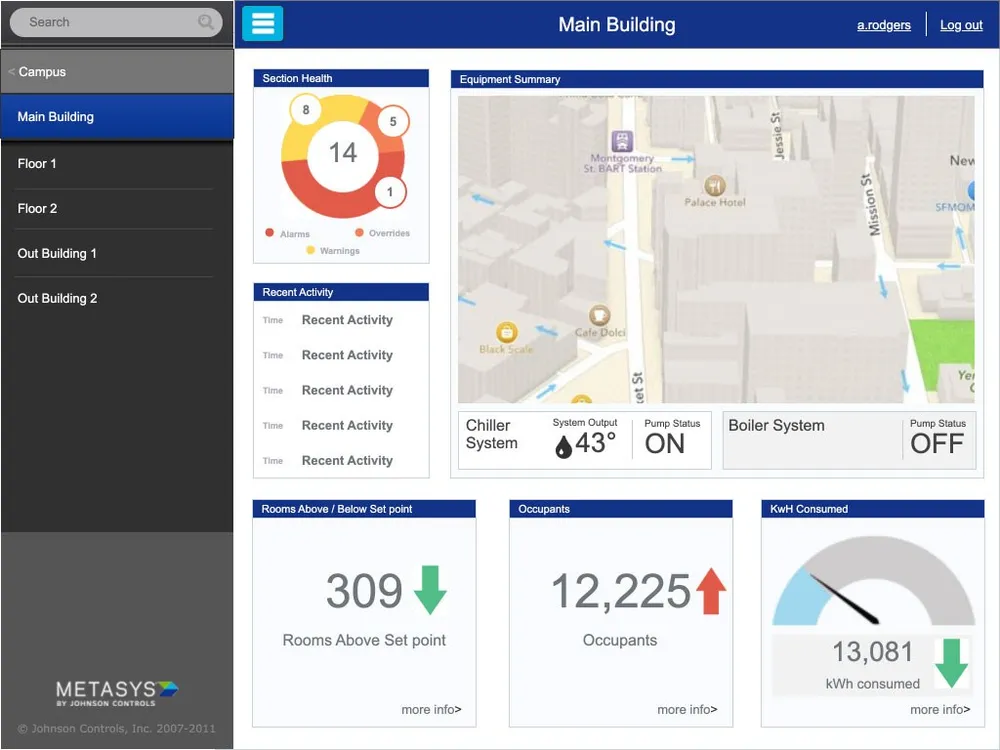
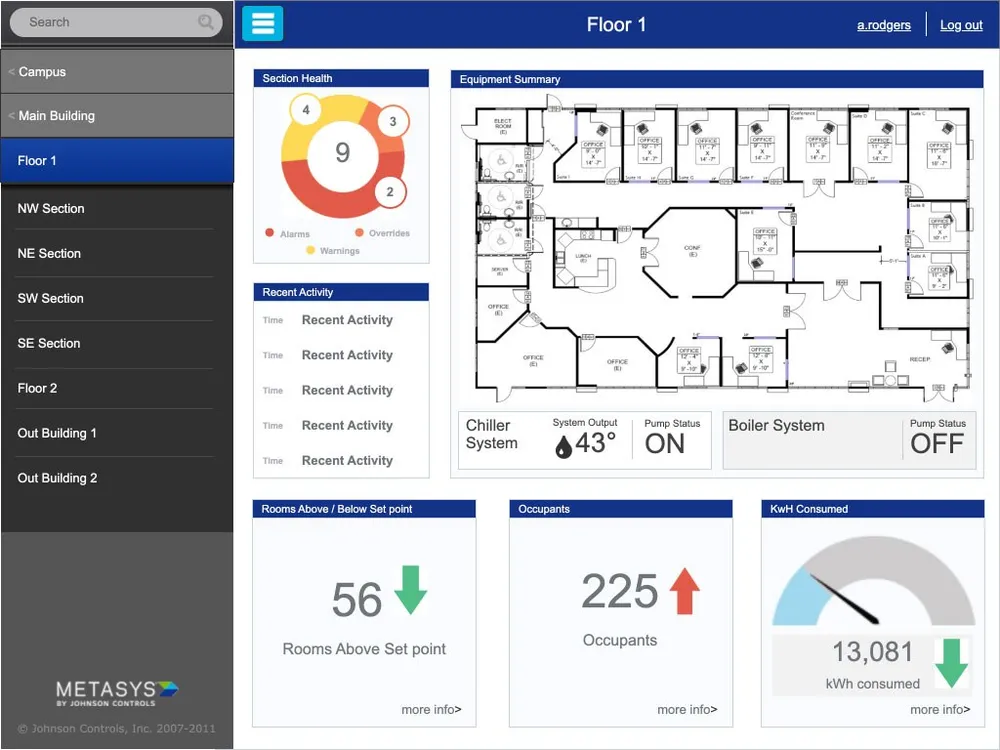
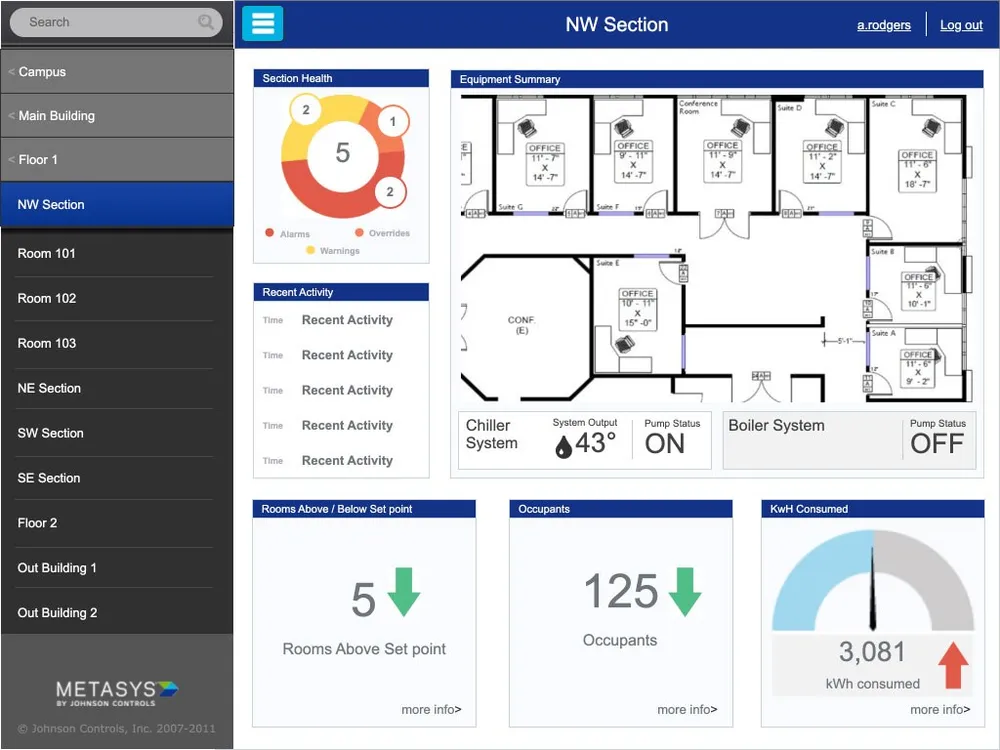
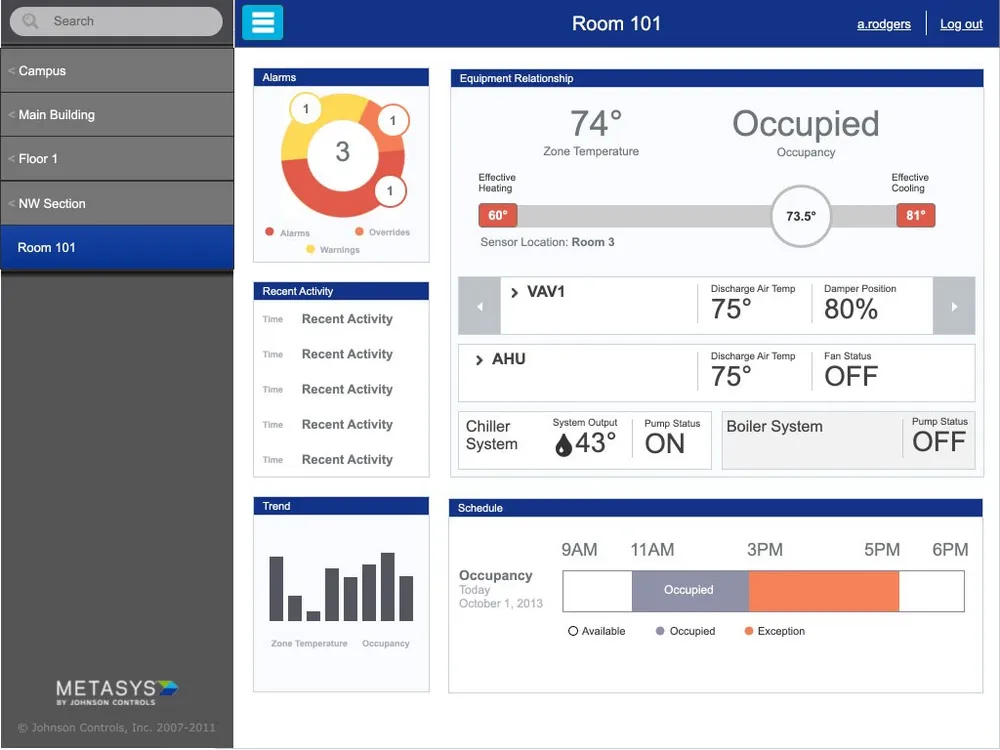
Lo-fi interactive prototype · Campus → Building → Floor → Floor-section → Room
Disrupt the industry with design
The final move was the presentation layer — and there was room to do something big. For decades operators had used JAVA software straight out of 1996, and the whole HVAC industry looked the part. I didn’t want to hand over pretty pictures. I wanted to disrupt the industry with design.
Light, pastel base
Soft base shades let the communicative elements — data, visualizations, notifications — come through clear as day.
A cleaner voice
A clean, utopian-future sans-serif replaced the SEGOE UI JCI had used since anyone could remember. A breath of fresh air.
One family, many products
Metasys brand colors anchored the dashboards and headers — a flagship standard for a whole family of JCI software.
Supporting artifacts: Campus dashboard
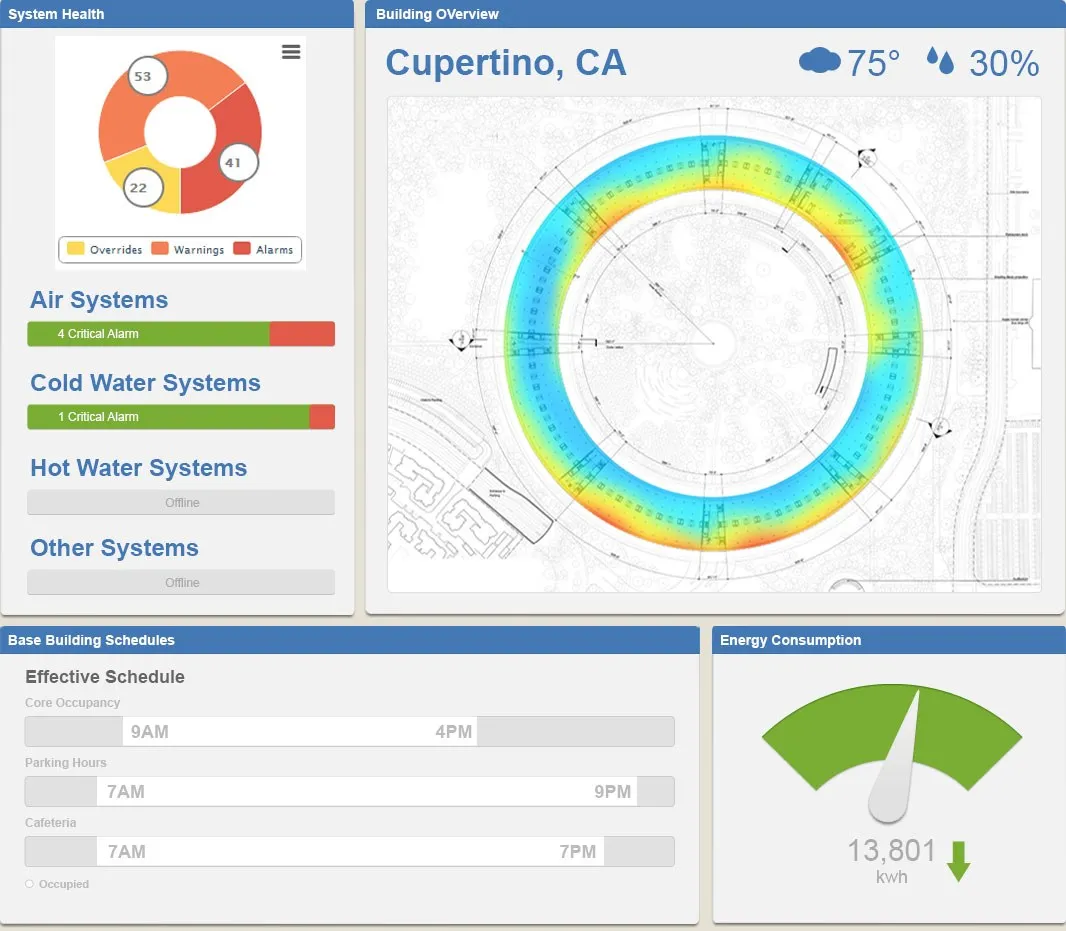
Supporting artifacts: Floor dashboard — air distribution & heat-maps
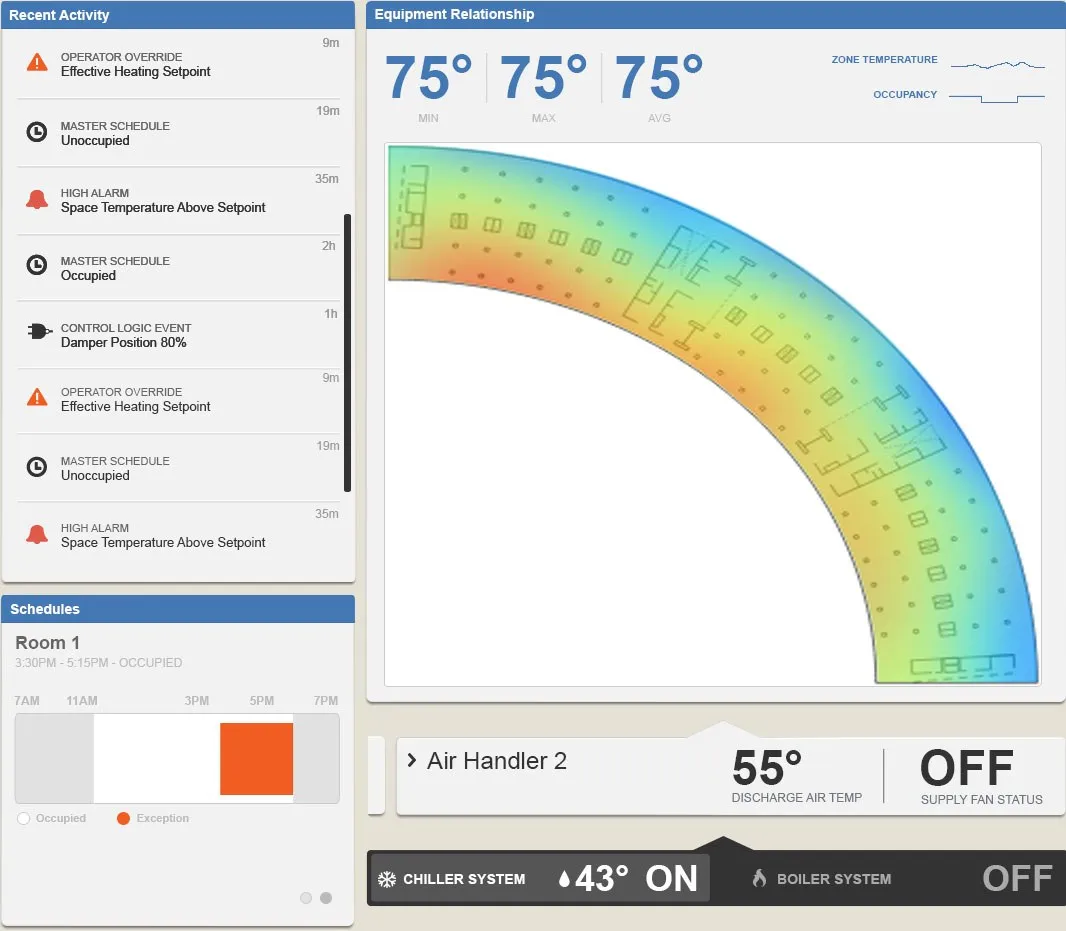
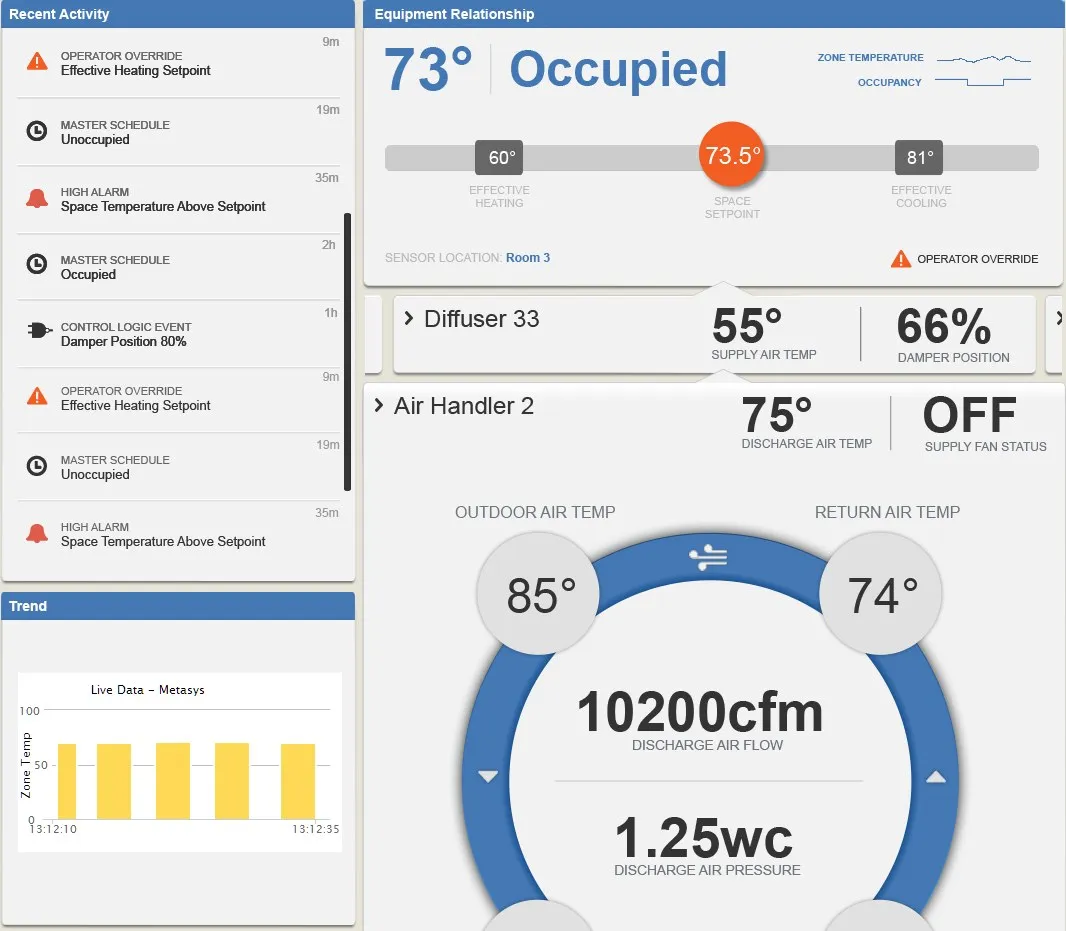
Supporting artifacts
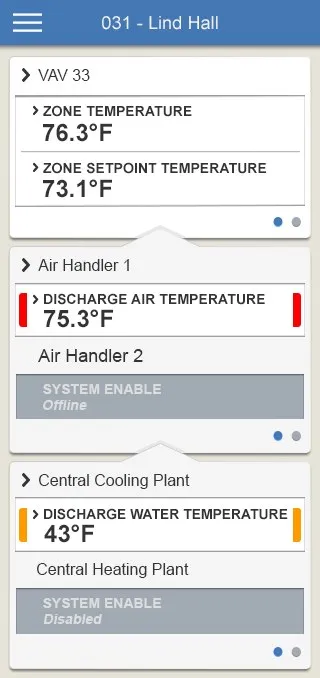
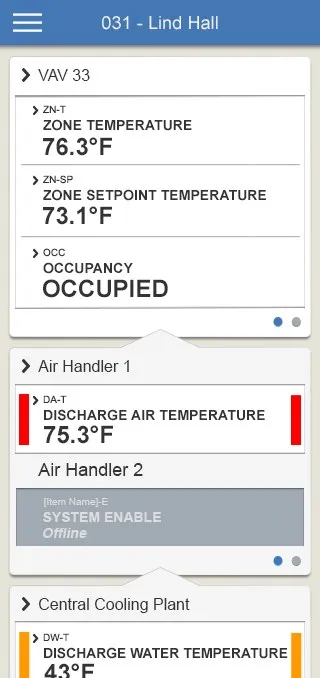
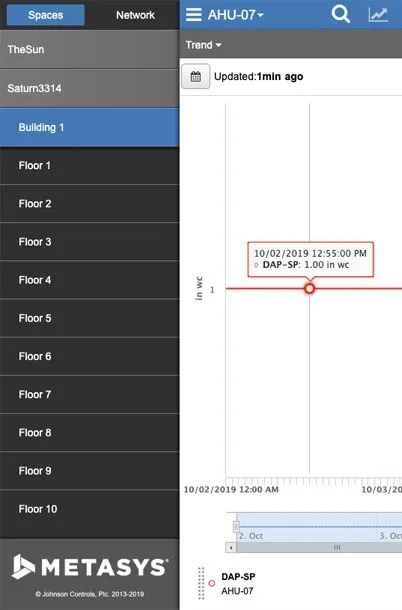
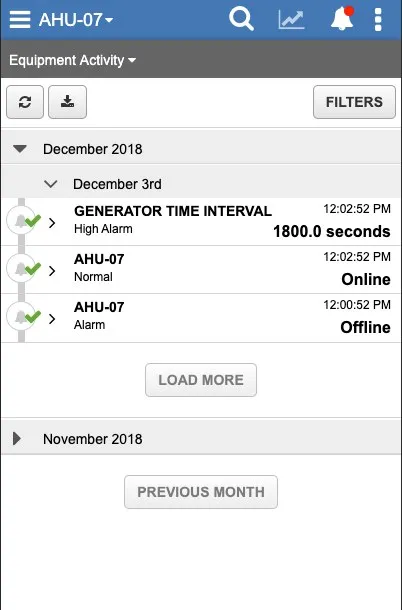
Early mobile & responsive design — engineered to hit just as hard on a phone as on desktop
A flagship — and a franchise.
Product Management dubbed the room’s data-visualization the “Circle of Comfort” — the first time JCI had seen data points organized so visually. It was distinctive enough that the company patented it.
The dashboards were fully responsive — engineered alongside developers to land just as hard on a phone as on desktop. The team then ran alpha-site visits, vetting the flows with customers around the world.
Best selling release of Metasys in the history of Metasys.
— Mark Ziolkowski · VP of Product Management & Competitive Response$3.4M
Metasys 8.0 subscription revenue. My design work contributed to this team outcome; I worked on IA, wireframes, and visual design as one of six UX team members.
+89%
Subscriptions jumped, driving a 20% increase in overall Metasys sales.
Supporting artifacts
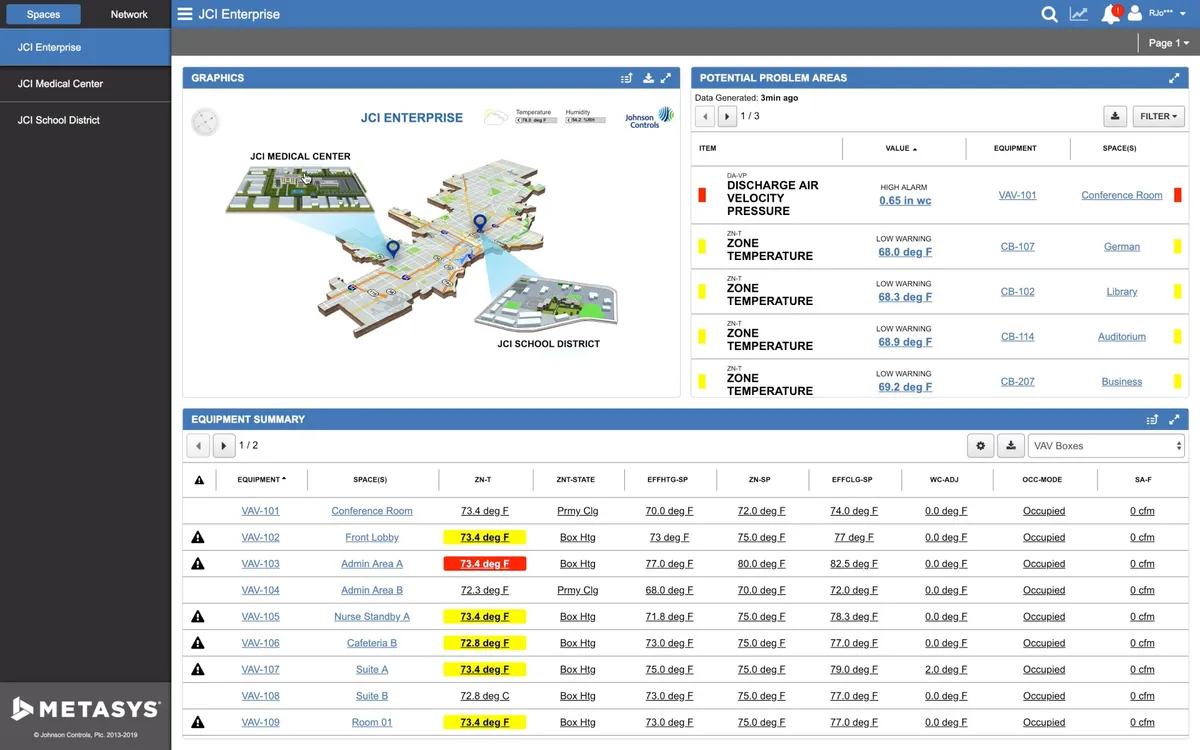
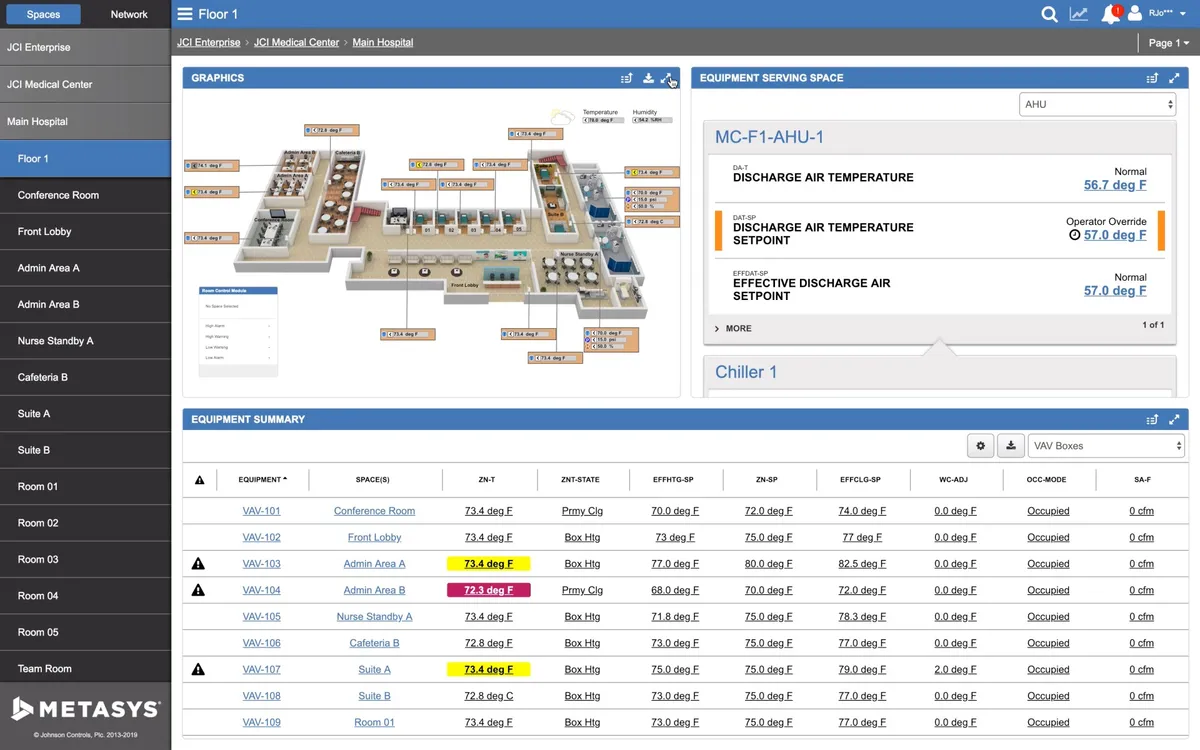
Metasys UI — building and equipment views, 2019
Patents & press.
US10528013B2
US20220067851A1
Facility Executive
Commercial Integrator
Security Sales & Integration
Healthcare Facilities Today
Corey Poquette
UX Lead
Michael Seidel
UX Research Lead
Alan Schwegler
UX Designer
Garrett Wiens-kind
UX Designer
Nicole Madison
UX Designer
Adam Grabowski
UX Designer